

 4 & 5 BHLK Prestigious Living
 Opp. The Grand Bhagwati (TGB), Pakwan Circle, S.G Highway, Ahmedabad, Gujarat-380054

Why Mivan Construction Leads the Next Generation of Construction?
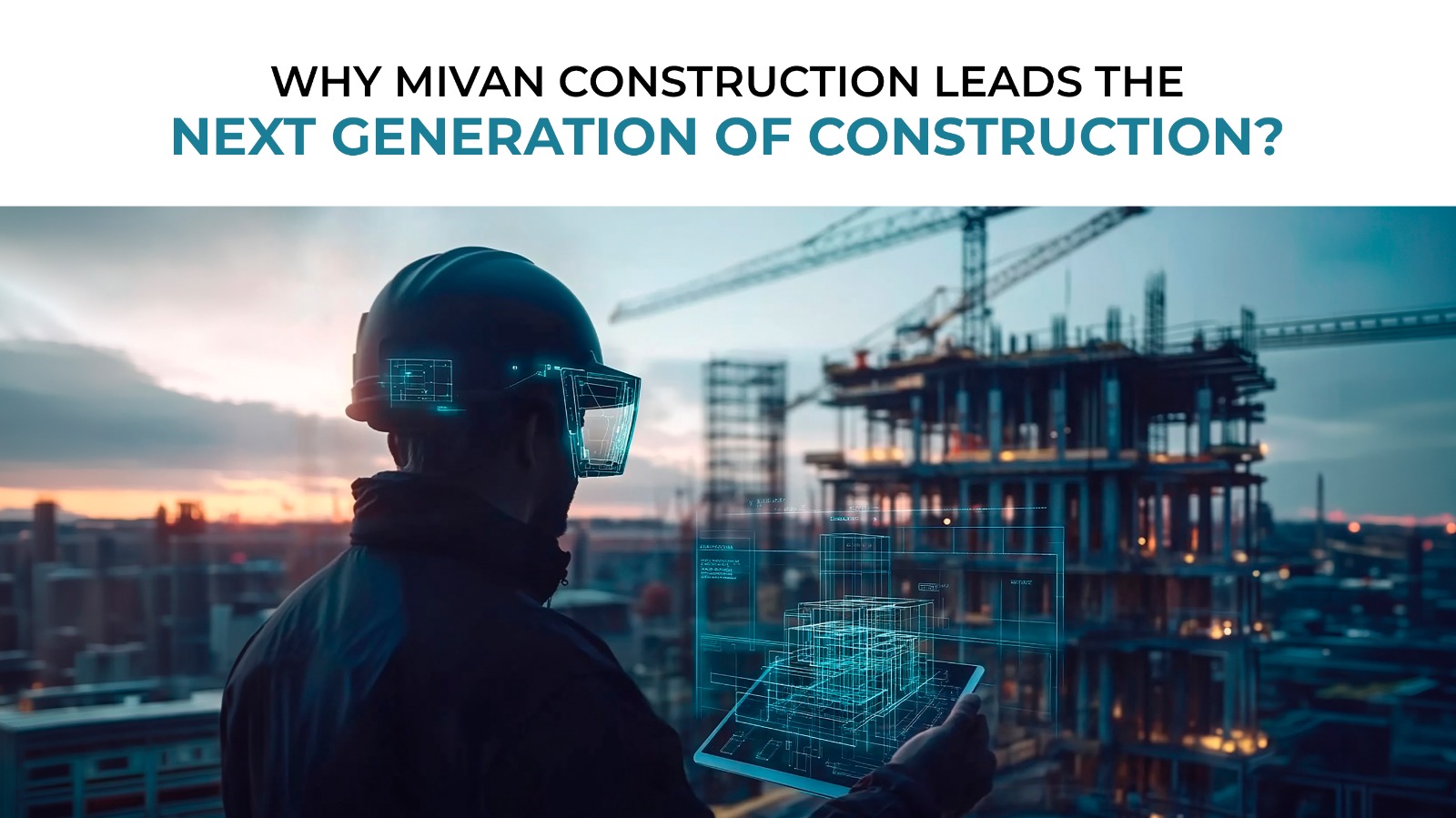
The skyline of modern Indian cities is evolving rapidly. High rise residential towers, integrated townships and mixed-use developments are rising faster than ever before. Behind this transformation is not just architectural vision or engineering brilliance, but also the construction technologies that make such scale and speed possible.
One of the most advanced construction methods today is Mivan Construction Technology. Over the past two decades, this technology has reshaped how large residential projects are built across India.
From Mumbai and Bengaluru to Ahmedabad and Pune, leading developers have increasingly adopted this technology for high rise residential developments. Its ability to deliver speed, structural precision and superior build quality has made it one of the most preferred construction systems in modern real estate.
But what exactly is Mivan construction, how does the process work and why are builders shifting towards this system?
What Is Mivan Construction?
Mivan construction is a modern construction technology that uses aluminum formwork systems to cast walls and slabs of a building in a single continuous concrete pour.
This technology originated from Malaysia and over time, it has been adopted globally and is now widely used for high rise building construction and large-scale residential projects.
In traditional construction, buildings are typically constructed using a combination of brick masonry walls and RCC columns, beams and slabs. This process involves multiple stages such as brick laying, plastering and structural casting, which increases construction time.
Mivan construction replaces this conventional method with a monolithic RCC wall structure.
Instead of brick walls, the entire structural system of walls and slabs is cast using aluminum formwork molds. These molds are assembled on-site to create the exact shape of the building components. Once concrete is poured and cured, the formwork is removed and reused for the next floor.
The result is a stronger, faster and more uniform construction system that significantly improves efficiency in large residential projects.
Mivan Construction Technology in Modern Real Estate
The rise of modern construction technology has been closely tied to the increasing demand for urban housing.
Cities today require high rise residential towers built within strict timelines and high quality standards. Traditional construction methods often struggle to keep up with these demands due to labor dependency and slower construction cycles.
Mivan construction technology addresses these challenges through a fast track construction system that emphasizes:
- Speed
- Structural consistency
- Reduced human error
- Better quality control
This is why the system is commonly used for large scale housing developments, high rise towers and township projects.
Across India, many reputed developers have adopted this technology to deliver precision-engineered residential buildings within shorter project timelines.
Step by Step Mivan Construction Process
Understanding the Mivan construction process helps explain why the system is so efficient.
Although it may look complex, the method follows a systematic cycle that repeats for every floor of the building.
1. Design and Planning
The process begins with detailed architectural and structural planning.
Since the Mivan construction relies on prefabricated aluminum formwork panels, every dimension of the building must be carefully designed beforehand. Wall thickness, door openings, slab dimensions and service ducts are all incorporated into the initial design stage.
Once finalized, the formwork panels are manufactured according to these specifications.
2. Formwork Assembly
The aluminum formwork panels are transported to the construction site and assembled according to the building layout.
These panels act as temporary molds that shape the walls, slabs, beams, columns and staircases of the structure.
Unlike traditional wooden or steel formwork, aluminum panels are lightweight, easy to handle and extremely precise. They can also be reused hundreds of times, making them efficient for multi-storey construction.
3. Reinforcement Placement
After the formwork is assembled, steel reinforcement bars are placed within the molds to provide structural strength.
Electrical channels, plumbing lines and service ducts are also installed during this stage so that they are embedded within the concrete walls.
This integration reduces the need for heavy wall chasing or drilling later.
4. Concrete Pouring
Once reinforcement and services are in place, high-quality concrete is poured into the formwork system.
The walls and slabs are cast simultaneously in a single pour, creating a monolithic structure. This is one of the defining features of Mivan technology.
The continuous pour ensures stronger bonding between structural elements and improves the building’s overall stability.
5. Curing and Formwork Removal
After the concrete gains sufficient strength, the aluminum formwork panels are carefully removed.
Because the panels are designed for reuse, they are cleaned and immediately repositioned for the next floor construction cycle.
In many cases, builders are able to achieve a floor cycle of 7 to 10 days, which is significantly faster than traditional construction methods.
Advantages of Mivan Construction
The growing popularity of Mivan construction technology is largely due to its many benefits. Here are some of the key advantages of this system:
Faster Construction Speed
One of the biggest advantages of Mivan construction is speed.
Traditional construction may take 15 to 20 days to complete a floor in high rise buildings. Mivan technology can reduce this cycle to about a week. This allows developers to complete large projects much faster.
Superior Structural Strength
Because the entire structure is cast using reinforced concrete walls and slabs, Mivan buildings have higher structural integrity.
The monolithic design improves load distribution and makes the structure more resilient against external stresses. This is especially important in high rise residential towers.
Better Quality and Precision
Aluminum formwork systems are manufactured with high precision.
As a result, walls and slabs have smooth and uniform surfaces, reducing the need for extensive plastering work. This leads to better finishing quality and improved durability.
Reduced Construction Waste
Traditional construction generates a large amount of debris from brick cutting, plastering and formwork removal. Mivan construction significantly reduces this waste because the aluminum panels are reused multiple times.
This makes it a more efficient and sustainable construction system.
Improved Seismic Performance
The RCC wall structure used in Mivan technology improves the building’s earthquake resistance.
The stable structure behaves more uniformly under seismic forces compared to brick masonry walls. For cities located in seismic zones, this is an important advantage.
Mivan Construction Vs Traditional Construction
Understanding the difference between Mivan construction and conventional construction methods helps highlight the technological shift taking place in the real estate industry.
Traditional construction uses:
- Brick masonry walls
- RCC beams and columns
- Multiple stages of plastering and finishing
This approach is labor intensive and time consuming.
Mivan construction, on the other hand, uses:
- Aluminum formwork systems
- Monolithic RCC walls and slabs
- Faster floor cycles
- Integrated service ducts and conduits
As a result, the technology delivers higher efficiency and consistency in large-scale developments.
Mivan Construction in India
The adoption of Mivan construction in India has increased rapidly over the last decade. Several factors have contributed to this shift like Rapid urbanization, growing demand for high rise housing, need for faster project delivery, Rising labor costs and many more.
Developers in tier 1 & tier 2 cities have increasingly integrated Mivan technology into their projects.
Government initiatives for affordable housing and urban infrastructure have also encouraged the use of fast track construction technologies.
Today, the system is widely recognized as one of the most reliable methods for high rise building construction in India.
Why Builders Prefer Mivan Construction
For developers like Constera Realty, the decision to adopt a particular construction system is influenced by several factors such as cost efficiency, project timelines and quality control.
Mivan construction technology provides advantages across all these areas.
Builders prefer the system because it enables:
- Faster construction cycles
- Higher structural reliability
- Consistent finishing quality
- Reduced dependence on manual labor
- Efficient large scale project execution
In competitive real estate markets, these benefits allow developers to deliver projects on schedule while maintaining high quality standards.
The Future of Construction Technology
As cities continue to expand, the demand for efficient construction systems will only increase. Technologies like Mivan formwork construction represent the future of urban development. They combine engineering precision, construction speed and structural strength, enabling the creation of modern residential environments that meet the expectations of today’s homeowners.
For developers, adopting such technologies is not just about building faster. It is about building smarter, safer and more sustainably.
And as India’s skyline continues to evolve, construction systems like Mivan will play an increasingly important role in shaping the homes and communities of tomorrow.
Get in touch now